
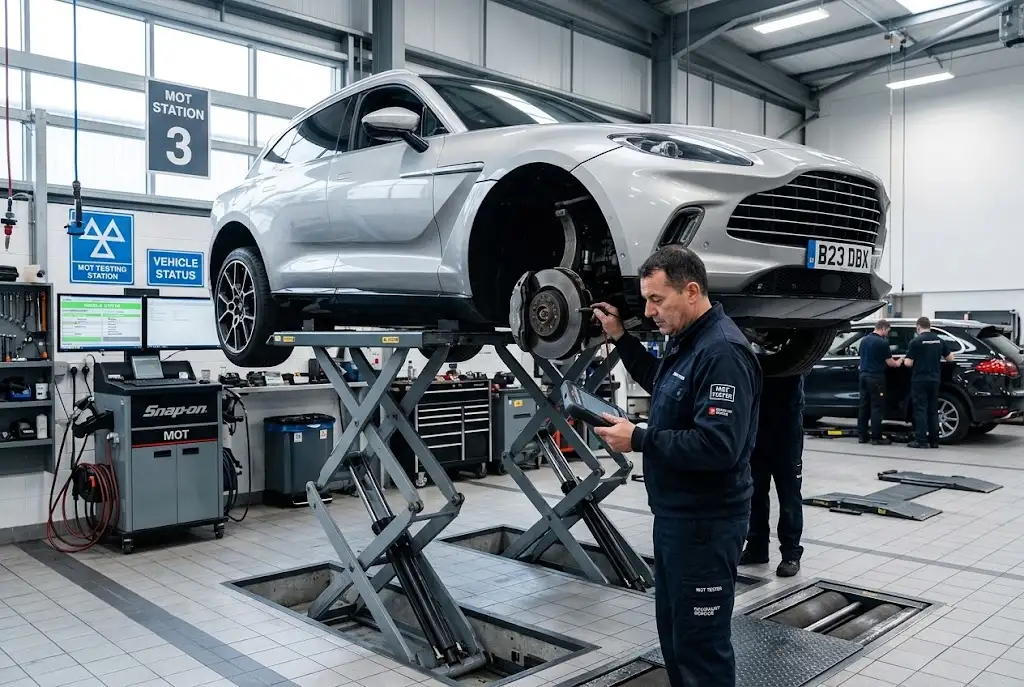

MOT and service planning is an important part of responsible vehicle ownership in the UK, particularly for owners of luxury and executive cars. Although an MOT and a service have different purposes, organising both as part of a wider maintenance schedule can make vehicle care easier to manage. For premium vehicles, this approach also creates opportunities to monitor condition, maintain service records and address developing issues before they become more disruptive.
A luxury vehicle deserves attention beyond its appearance. Sophisticated mechanical systems, advanced electronics, performance components and premium interiors all benefit from appropriate care. Understanding how an MOT fits alongside servicing and preventative maintenance allows owners to take a more organised approach to long-term vehicle ownership.
Understanding MOT and Service Requirements
An MOT and a vehicle service are not the same thing. An MOT is a regulated test that assesses whether a vehicle meets specific safety and environmental requirements at the time of testing. A service, meanwhile, is designed to maintain the vehicle and its components according to an appropriate maintenance schedule.
This distinction is important because passing an MOT does not mean that every maintenance requirement has been completed. A vehicle can meet the requirements of the test while still approaching a scheduled service or requiring routine maintenance.
Likewise, completing a service does not replace an MOT when a vehicle is legally required to have one. Owners should therefore treat both as separate but complementary elements of their annual ownership planning.
Why MOT and Service Planning Matters for Luxury Cars
Premium vehicles often have more sophisticated systems than basic cars, making consistent maintenance particularly important. A structured schedule gives owners a clearer opportunity to monitor brakes, tyres, suspension, fluids, lighting, electronic systems and other components.
Annual planning can also reduce the risk of forgetting important dates. Rather than treating an MOT as an isolated yearly task, owners can incorporate it into a broader ownership calendar that includes servicing and preventative checks.
This approach complements regular vehicle maintenance, where ongoing attention is given to the condition of the vehicle between scheduled appointments.
What an MOT Covers
An MOT assesses specific aspects of a vehicle’s safety and environmental performance. The test is not designed to provide a complete mechanical inspection of every component or to determine whether a vehicle has received all of its recommended maintenance.
Items assessed can include areas such as tyres, brakes, lights, steering, suspension and other relevant safety-related components. The exact outcome depends on the vehicle’s condition and the requirements applicable to the test.
Because an MOT has a defined scope, owners should not use a successful test as a substitute for routine servicing. Both processes contribute differently to responsible vehicle care.
For the current official requirements and testing information, motorists can consult the GOV.UK MOT guidance.
How Car Servicing Fits Into Annual Ownership Planning
Car servicing focuses on maintaining the vehicle rather than simply determining whether it meets MOT requirements. Depending on the vehicle and manufacturer’s recommendations, servicing can involve inspection and maintenance of various mechanical and operational systems.
Different vehicles may require interim, full or major servicing at different intervals. The appropriate schedule should be based on the manufacturer’s recommendations, mileage, age and usage rather than a generic timetable.
Our guide to car servicing provides a broader explanation of different service levels and how they can support premium vehicle ownership.
MOT and Service: Why Timing Matters
Timing can make annual vehicle care considerably easier. Owners should know when their MOT is due and when the next scheduled service falls. If the dates are close together, it may be convenient to arrange them within the same ownership period, although they remain separate processes.
Planning ahead also leaves more room to deal with unexpected findings. If an inspection identifies worn tyres, brake components or another issue, owners have an opportunity to understand the problem and arrange appropriate work rather than dealing with it at the last moment.
This is particularly useful for premium vehicles because owners may want specialist attention rather than an immediate, reactive repair. A planned approach provides more time to choose an appropriate workshop and understand the recommended work.
Preparing a Luxury Vehicle for Its MOT
Owners can take sensible steps before an MOT without attempting to predict the result. Basic checks of lights, tyres, windscreen condition, number plates and other visible items can help identify obvious concerns.
However, owners should avoid assuming that a quick pre-test inspection replaces professional maintenance. If the vehicle has developed a warning light, unusual braking behaviour, steering issue or other noticeable symptom, it is sensible to have the underlying issue assessed.
A professional vehicle maintenance programme can help ensure that potential concerns are addressed throughout the year rather than only immediately before an MOT.
What Happens If an MOT Identifies a Problem?
An MOT may identify a defect or advisory item requiring attention. The appropriate response depends on the nature and severity of the finding.
Safety-related defects should receive appropriate priority. Other observations may provide useful information about components that could require attention in the future. Owners should ask for a clear explanation of any findings so they understand what has been identified and what action is recommended.
If a significant mechanical or electrical fault is identified, dedicated auto repair services may be required. A repair should ideally begin with accurate diagnosis so the underlying issue can be properly understood.
The Difference Between an MOT Advisory and a Repair
An advisory is information about a component or condition that does not necessarily mean the vehicle has failed the MOT. It can nevertheless be useful because it alerts the owner to an issue that may deserve monitoring or future attention.
Owners should not automatically ignore advisories. Instead, they can discuss them with a qualified technician and determine whether immediate work is appropriate or whether the condition can be monitored as part of normal maintenance.
This is where good ownership planning becomes valuable. A service history and maintenance record can help owners track issues over time and avoid losing sight of previously identified concerns.
Keeping a Strong Service History
A detailed service history can provide valuable information about the vehicle’s maintenance and repair background. It can show when services were completed, what work was carried out and which components have previously required attention.
For premium vehicles, maintaining this documentation can be particularly useful. Luxury cars can have complex maintenance requirements, and future technicians may benefit from understanding previous work.
A consistent service history can also contribute to the vehicle’s appeal if it is eventually sold. Buyers may want evidence that the car has been maintained appropriately throughout its ownership.
Owners should therefore keep invoices, service records and relevant MOT documentation together where possible. Digital copies can provide an additional layer of convenience.
MOT and Service for Executive Vehicle Owners
Executive vehicles are often used for commuting, business travel and long-distance journeys. Their maintenance requirements can therefore form an important part of professional and personal scheduling.
For a vehicle used frequently, owners may want to plan servicing around mileage rather than waiting for an annual reminder. Regular tyre, brake and fluid checks can also become important when the vehicle covers significant distances.
Low-mileage executive vehicles still require appropriate care. Time-based servicing requirements can remain relevant even when the vehicle is not driven extensively.
Combining MOT Planning With Preventive Maintenance
MOT preparation should not be the only time owners think about vehicle condition. Preventive maintenance provides a broader framework for monitoring the vehicle throughout the year.
Regular attention to tyres, brakes, batteries, fluids and other wear items can help identify changes before they become more serious. It can also make the eventual MOT less of a standalone event because the vehicle has been receiving appropriate attention throughout the year.
For premium ownership, this combination of scheduled servicing and preventive care creates a more complete maintenance strategy. The goal is not to carry out unnecessary work, but to respond appropriately to the vehicle’s actual condition.
When MOT and Service Appointments Can Be Combined
Some owners prefer to arrange their MOT and service around the same period for convenience. This can simplify annual planning and reduce the number of separate appointments that need to be remembered.
However, combining appointments does not mean the MOT and service become one test. The service and MOT still have different purposes, and each should be completed according to its own requirements.
Where a service reveals a fault that could affect an MOT, addressing the issue before testing may also provide a more organised ownership experience. The exact approach should depend on the vehicle and the findings of the service.
Choosing a Workshop for Premium Maintenance
The workshop chosen for servicing and repair can influence the overall ownership experience. For a premium or prestige vehicle, owners may want to consider technical experience, diagnostic capabilities, communication and the workshop’s approach to handling higher-value vehicles.
A professional workshop should be able to explain recommended maintenance clearly. Owners should understand what has been inspected, what work has been completed and whether anything requires future attention.
Good documentation is another consideration. Clear service and repair records help maintain continuity and can support future maintenance decisions.
How MOT and Service Planning Supports Vehicle Compliance
Vehicle compliance is an important part of responsible ownership. Keeping track of the MOT due date helps ensure that the vehicle is tested when required, while servicing helps maintain its mechanical condition.
Owners should remember that an MOT certificate does not provide a guarantee that a vehicle will remain roadworthy for the entire certificate period. The vehicle’s condition can change after the test, which is why ongoing maintenance remains important.
Drivers should continue to respond to warning lights, unusual noises, changes in handling and other signs of potential problems throughout the year.
MOT and Service Planning for Long-Term Ownership
A well-organised ownership schedule can combine MOT dates, servicing intervals, preventative checks and repair records. This makes it easier to see upcoming requirements and plan them around the vehicle’s use.
For example, an owner might record the next service mileage, MOT expiry date, tyre condition and any advisories from the previous test. Reviewing these details periodically can help prevent important tasks from being overlooked.
This approach also works well alongside broader premium auto services. Instead of treating each maintenance requirement separately, owners can view servicing, repairs, inspections and testing as connected parts of long-term vehicle care.
Building a Premium Ownership Schedule
The most effective MOT and service strategy is simple, organised and based on the vehicle’s real requirements. Start with the manufacturer’s recommended servicing schedule, keep track of the MOT due date and maintain accurate records of completed work.
From there, owners can incorporate preventative checks and respond promptly when the vehicle shows signs of a problem. If a repair becomes necessary, specialist auto repair services can provide a dedicated route for addressing more significant faults.
For ongoing maintenance, the wider vehicle maintenance strategy should remain active between annual testing appointments. This creates continuity rather than allowing vehicle care to become concentrated around the MOT date.
Ultimately, MOT and service planning is about making premium vehicle ownership more structured. An MOT helps assess legal safety and environmental requirements, while servicing and maintenance support the vehicle’s ongoing condition. When these responsibilities are managed together, owners can enjoy a more informed, proactive and confident approach to luxury vehicle care.
Frequently Asked Questions About MOT and Service
Is an MOT the same as a car service?
No. An MOT is a regulated test covering specific safety and environmental requirements, while a service is maintenance designed to keep the vehicle operating appropriately. They should be treated as separate but complementary parts of vehicle care.
Can I have my MOT and service at the same time?
Yes, owners can often arrange the appointments around the same period for convenience. However, the MOT and service remain separate processes with different purposes and requirements.
Does passing an MOT mean my car is fully maintained?
No. An MOT does not replace routine servicing or preventative maintenance. A vehicle can pass its MOT while still approaching a scheduled service or requiring other maintenance.
What should I do if my MOT identifies a defect?
The appropriate action depends on the defect. Safety-related issues should receive appropriate priority, while other findings can be discussed with a qualified technician to determine whether immediate repair or future monitoring is appropriate.
Why should luxury vehicle owners keep MOT and service records?
Keeping records provides a useful history of testing, servicing and repairs. It can help with future maintenance planning and provide useful documentation if the vehicle is eventually sold.
How can I prepare for an MOT?
Owners can check basic items such as lights, tyres, the windscreen and number plates before the test. However, professional servicing and maintenance remain important because an MOT is not a substitute for comprehensive vehicle care.
For official information about MOT requirements, test results and vehicle testing, motorists can consult the GOV.UK MOT guidance.
