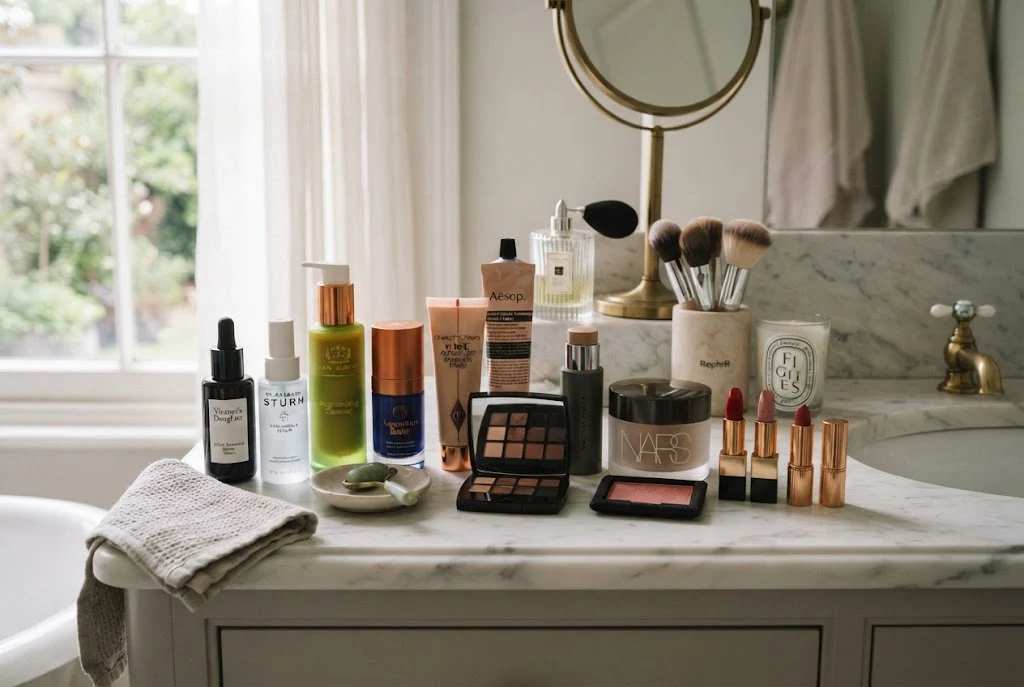

Beauty SEO helps beauty brands, publishers, retailers and service businesses improve their visibility when people search online for products, advice, ingredients, treatments and industry information. Because the beauty sector is highly competitive, simply publishing product pages is rarely enough. Successful search optimisation requires useful content, clear website structure, relevant keywords and a strong understanding of what consumers are trying to find.
For a skincare brand, that might mean appearing for searches about ingredients and routines. For a cosmetics retailer, it could involve product comparisons and buying guides. A beauty publication may focus on educational articles, trends and industry coverage. Although their objectives differ, all can benefit from a structured SEO approach.
This guide explains the main elements of a practical beauty SEO strategy, including keyword research, content SEO, internal linking, topical authority, backlinks and digital PR.
What Is Beauty SEO?
Beauty SEO is the process of improving a beauty-focused website so that search engines can understand its content and users can discover relevant pages through organic search.
It applies to a wide range of businesses and websites, including:
- Skincare brands
- Makeup companies
- Haircare businesses
- Beauty retailers
- Salons and beauty professionals
- Beauty publishers and magazines
- Independent ecommerce stores
- Beauty service providers
- Industry websites
The goal is not simply to attract more visitors. Effective SEO aims to attract people whose search intent matches what a website offers.
For example, someone searching for information about a skincare ingredient may be looking for education, while someone searching for a specific product may already be close to making a purchase. A strong SEO strategy recognises those differences and creates appropriate content for each stage.
Why Beauty SEO Matters
Beauty is an information-heavy industry. Consumers often research products before purchasing them, especially when they are unfamiliar with an ingredient, brand or product category.
Search engines therefore provide an important discovery channel. A well-optimised article can introduce a reader to a brand before that person has decided what to buy. Likewise, a strong product page can capture demand from someone who already knows what they want.
Organic search can also provide value beyond individual transactions. Useful content can attract recurring visitors, earn references from other websites and establish a publication or brand as a reliable source of information.
However, SEO should not be treated as a shortcut. Search visibility develops from the combined quality of a website’s content, structure, relevance and reputation.
Build a Beauty SEO Strategy Around Search Intent
A successful beauty SEO strategy begins with search intent rather than a list of keywords. Before creating a page, determine what the user is actually trying to accomplish.
Beauty searches can generally fall into several broad groups.
Informational Searches
These searches are usually questions or research queries. A person may want to understand an ingredient, learn how to follow a routine or find out how a beauty treatment works.
Educational guides are often appropriate for these searches because the reader needs information before considering a product or service.
Commercial Research Searches
Commercial searches happen when users are comparing options. They may search for the best products, product comparisons, reviews or particular features.
Well-structured buying guides and comparison articles can address this intent while helping readers understand the differences between available choices.
Transactional Searches
Transactional users are closer to taking an action. They may search for a specific brand, product or beauty service.
Product and service pages should make the next step clear while providing enough information to answer important questions.
Branded Searches
Branded searches involve a specific company or product. These searches can be particularly valuable because the user already has some awareness of the brand.
Businesses should ensure that their official pages provide accurate, useful and easy-to-navigate information for these searches.
Beauty Keyword Research
Beauty keyword research helps identify the language people use when searching for products, information and services. However, effective research goes beyond selecting keywords with high search volume.
Relevant questions include:
- What does the searcher want to know?
- Is the query informational or transactional?
- How competitive is the search term?
- Does the website have a page that genuinely answers the query?
- Could several related searches be covered by one comprehensive page?
- Are there more specific long-tail opportunities?
Longer and more specific searches can be particularly useful because they often reveal clearer intent. A broad term such as “skincare” can represent many different needs, while a more specific query may indicate exactly what the user wants to learn.
Keyword research should therefore be used to understand demand and vocabulary, not as a reason to repeat the same phrase throughout an article.
Create Strong Beauty Content SEO
Beauty content SEO combines useful editorial content with a structure that makes pages easier for search engines and readers to understand.
Every article should have a clear primary subject. Supporting questions can then be organised under relevant headings.
For example, an article about skincare routines might cover product order, routine frequency, common mistakes and ingredient considerations. Each section should add information rather than repeating the introduction.
Titles and headings should accurately describe the content. Paragraphs should remain readable, while lists can make practical information easier to scan.
Search optimisation should also consider the page’s purpose. A product guide should not read like an industry report, and an educational article should not become a long sales pitch.
Build Beauty Topical Authority
Beauty topical authority develops when a website consistently publishes useful, closely related information around a defined subject.
Instead of producing disconnected articles, publishers can organise content into clusters. One central topic can be supported by several related pages, with internal links connecting them where relevant.
For a UK beauty website, a content cluster might include the UK beauty industry, regulatory requirements, beauty writing, beauty SEO and product buying guides.
Each page should have a distinct purpose. An industry article can discuss market developments, while a regulation article can focus on compliance. A writing article can address editorial production, and an SEO article can explain digital visibility.
This structure allows the website to cover a broad subject without forcing every article to target the same keyword.
Internal Linking for Beauty Websites
Internal linking is an important part of website architecture. It helps readers discover related information and gives search engines additional context about the relationships between pages.
Beauty websites often have natural opportunities for internal links because subjects overlap. A skincare article can point to a relevant product guide. A beauty marketing article can reference SEO resources. An industry article can connect to regulation or market-trend coverage.
The most useful internal links are contextual. The anchor text should give the reader a reasonable idea of what they will find after clicking.
For example, an article discussing editorial production can naturally reference beauty writing. A consumer-focused page can link to best beauty products when the reader needs further buying guidance.
A website does not need to link to every related article from every page. Selective linking usually produces a cleaner user experience and a more meaningful content structure.
On-Page SEO for Beauty Websites
On-page optimisation ensures that individual pages communicate their topic clearly.
Important elements include:
- A descriptive page title
- A clear H1 heading
- Logical H2 and H3 headings
- A useful introduction
- Relevant primary and secondary terms
- Descriptive image alt text
- Clear internal links
- Readable paragraphs
- Useful metadata
- Accurate and original content
The focus keyword should appear naturally where it helps establish relevance. There is no benefit in repeating it unnecessarily.
Images can also contribute to usability. Beauty websites frequently rely on visual content, so descriptive alt text can help explain the purpose or subject of an image to users who cannot see it.
Technical SEO for Beauty Ecommerce Sites
Ecommerce websites can face additional SEO challenges because they may contain hundreds or thousands of product pages.
Common issues include duplicate product descriptions, filters creating unnecessary URLs, discontinued products, thin category pages and inconsistent internal linking.
Strong category pages can help organise products around meaningful topics. Product pages should provide original information rather than relying entirely on manufacturer descriptions.
Website performance and mobile usability also matter because many beauty consumers browse products on mobile devices. Navigation should make it easy to move from category pages to individual products and back again.
Structured data can also help search engines understand eligible content when implemented correctly. Google’s documentation explains how structured data can be used to help search engines understand page content and potentially make pages eligible for enhanced search appearances. Google’s structured data documentation provides the relevant technical guidance.
Beauty Backlinks and Link Building
Beauty backlinks are links from external websites to relevant pages on a beauty website. Quality matters more than simply accumulating large numbers of links.
A backlink can be particularly valuable when it comes from a relevant and credible publication that has a genuine reason to reference the destination page.
For example, a beauty publication might reference a well-researched industry report, while a lifestyle website could link to a useful skincare guide. The strongest links generally make sense from the reader’s perspective.
What Makes a Useful Beauty Backlink?
Relevant factors include:
- Topical relevance
- Editorial context
- Quality of the referring website
- Useful destination content
- Natural anchor text
- Genuine value for readers
Businesses should avoid treating link building as a numbers game. A large collection of irrelevant or low-quality links does not automatically create a stronger website.
Beauty Link Building Through Digital PR
Beauty link building can work particularly well alongside digital PR. Beauty is naturally connected to trends, consumer behaviour, product launches, research, expert commentary and visual stories, creating opportunities for editorial coverage.
A brand could develop an original industry insight, conduct a properly designed survey, publish useful expert commentary or create a resource that journalists and publishers genuinely want to reference.
Beauty digital PR works best when the underlying story is interesting without relying on the hope that someone will publish a promotional announcement.
The objective is to create something worth discussing or referencing. Links may then occur as a natural consequence of useful coverage.
SEO for Skincare and Other Beauty Niches
Skincare SEO is one of the most competitive areas within beauty search. Consumers search across ingredients, routines, product categories, concerns, brands and individual products.
A skincare website can therefore build multiple connected content groups instead of attempting to rank every page for the same broad term.
For example, educational content can explain ingredients, routine content can address product order and usage, comparison pages can help users evaluate options, and product pages can support transactional searches.
The same principle applies to makeup, haircare, fragrance and other beauty categories. The exact content structure should reflect the questions and buying journeys associated with each niche.
Measuring Beauty SEO Performance
SEO performance should be evaluated using more than a single ranking position. Useful indicators can include organic traffic, impressions, clicks, engagement, conversions and the performance of individual content groups.
For ecommerce websites, product visibility and organic revenue can be particularly important. For publishers, page engagement, returning visitors and growth in organic readership may provide more meaningful signals.
It is also useful to monitor which pages are attracting links and which topics are generating search visibility. These insights can inform future content planning.
SEO is rarely a one-time project. Search behaviour, competition, products and consumer interests change, so successful websites regularly review their content and technical foundations.
Common Beauty SEO Mistakes
Targeting Only Broad Keywords
Broad terms can be highly competitive and may not clearly indicate user intent. A stronger strategy usually combines broader subjects with specific queries.
Publishing Thin Content
Creating many short pages that provide little additional value can make a website harder to navigate. Fewer, stronger resources may provide a better foundation for a content cluster.
Overusing Keywords
Repeating the same phrase in every paragraph can make content unnatural. Search optimisation should support readability rather than interfere with it.
Ignoring Existing Content
New articles are not always the answer. Sometimes an existing page can be improved, expanded, consolidated or internally linked more effectively.
Chasing Links Without Improving Content
External promotion cannot compensate for weak destination pages. Before pursuing backlinks, businesses should make sure the content provides a genuine reason for another website to reference it.
How to Build a Sustainable Beauty SEO Strategy
A practical long-term process can be organised into several stages.
- Research the audience: Identify the questions, problems and purchasing decisions relevant to your target readers.
- Map search intent: Group keywords according to what users actually want to accomplish.
- Build content clusters: Organise related subjects into connected groups with distinct search purposes.
- Create useful pages: Produce original content that answers the intended question thoroughly.
- Improve internal linking: Connect related pages using natural and descriptive anchor text.
- Optimise technical foundations: Review site speed, mobile usability, indexing, navigation and ecommerce architecture.
- Earn relevant links: Promote genuinely useful resources through outreach, partnerships and digital PR.
- Measure results: Review organic visibility, traffic, engagement and business outcomes.
- Refresh strategically: Update pages when information, products, regulations or search behaviour changes.
This process creates a stronger foundation than relying on isolated SEO tactics. Each element supports the others: keyword research informs content, content supports internal linking, useful resources create link opportunities, and performance data guides future publishing.
The Future of Beauty SEO
The future of beauty SEO will continue to be influenced by changing search behaviour, ecommerce, social discovery and increasingly sophisticated search experiences.
Consumers are likely to continue researching products across multiple channels before purchasing. This makes it important for beauty brands to maintain consistent, useful information across their websites and other digital platforms.
At the same time, publishing more content is not necessarily the answer. Websites need content that demonstrates genuine usefulness and addresses specific user needs.
Brands that understand their audiences, create connected content and maintain strong technical foundations can build organic visibility over time. The emphasis should remain on helping users first and optimising the experience around that goal.
Final Thoughts on Beauty SEO
Beauty SEO is most effective when it is treated as a complete digital strategy rather than a collection of isolated keywords. Beauty brands and publishers need to understand search intent, create useful content, build topical authority, connect related pages and earn relevant external references.
Keyword research can identify opportunities, but content quality determines whether those opportunities are worth pursuing. Likewise, backlinks can strengthen a website’s visibility, but they are most valuable when they point to genuinely useful resources.
For beauty businesses operating in competitive markets, the strongest approach is usually consistent and strategic. Build content around real customer questions, connect related topics naturally, improve the technical experience and measure what produces meaningful results.
Over time, this combination can turn a collection of beauty pages into a structured resource that serves consumers, supports brands and establishes lasting organic visibility.