

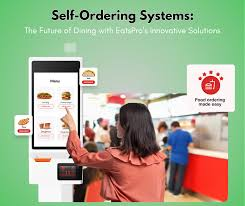
The restaurant industry is witnessing a major transformation, driven by evolving customer expectations and advancements in technology. With diners now valuing speed, convenience, and personalized service, traditional ordering methods are no longer sufficient. Self-ordering systems have emerged as a game-changing solution, offering a frictionless dining experience while also streamlining restaurant operations.
From quick-service restaurants (QSRs) and fast-casual chains to fine dining establishments, self-ordering solutions are redefining how customers interact with menus, place their orders, and make payments. Hashmato’s self-ordering system provides a fully integrated, intelligent solution that empowers both customers and restaurant staff, ensuring faster service, fewer errors, and increased profitability.
In this blog, we’ll explore how self-ordering systems have evolved, their advantages for restaurants, and why Hashmato’s self-ordering system stands out in the competitive restaurant tech market.
The Evolution of Self-Ordering in Restaurants
The Traditional Model: Challenges Faced by Restaurants
For decades, restaurants have relied on staff-led ordering systems, where waiters manually take orders and relay them to the kitchen. While this system works in many settings, it presents numerous challenges:
- Slow Order Processing – During peak hours, long queues and slow service lead to dissatisfied customers and lost sales.
- Order Inaccuracy – Miscommunication between customers and waitstaff often results in incorrect orders, increasing food wastage.
- High Labor Costs – Hiring and training staff is expensive, and labor shortages can impact service quality.
- Limited Upselling Opportunities – Waiters may miss chances to upsell due to time constraints or lack of product knowledge.
The Rise of Self-Ordering Systems
To address these inefficiencies, self-ordering technology began gaining traction in quick-service restaurants (QSRs). Kiosks were introduced as an alternative to counter service, allowing customers to browse menus, customize orders, and make payments independently. With advancements in mobile technology, self-ordering expanded into:
- QR Code Ordering – Customers scan a QR code at their table and place orders from their mobile devices.
- Tabletop Tablets – Touchscreen devices at tables allow customers to browse digital menus and order directly from their seats.
- Mobile Ordering Apps – Dedicated restaurant apps provide a fully digital ordering and payment experience.
With Hashmato’s self-ordering system, restaurants can integrate all these ordering methods into a unified, seamless ecosystem, improving both efficiency and customer satisfaction.
Key Benefits of Self-Ordering Systems
- Speed & Convenience for Customers
Self-ordering systems remove the friction of traditional ordering, allowing customers to place their orders without waiting for a server. Whether using a kiosk, mobile app, or QR code, customers can order instantly, reducing wait times and improving overall satisfaction.
- Increased Order Accuracy & Customization
When customers place their own orders, the likelihood of errors is greatly reduced. Hashmato’s self-ordering system provides clear visual menus with customization options, ensuring customers get exactly what they want.
Example: A customer with dietary restrictions can easily remove or substitute ingredients without relying on verbal communication, minimizing misunderstandings.
- Boost in Sales & Upselling Opportunities
Self-ordering systems are programmed to intelligently suggest upgrades, combos, and add-ons based on customer selections.
- Example: If a customer orders a burger, the system may recommend a combo with fries and a drink at a discounted price.
- AI-powered suggestions can further drive sales by promoting popular or high-margin menu items.
- Better Staff Allocation & Cost Savings
By automating the order-taking process, restaurants can reduce their dependency on front-of-house staff and focus human resources on food preparation and customer service.
This results in lower labor costs and a more efficient use of employees, especially during peak hours.
- Enhanced Payment Flexibility
Modern self-ordering systems, including Hashmato’s solution, integrate multiple cashless payment options, such as:
✔ Credit/Debit Cards
✔ Mobile Wallets (Google Pay, Apple Pay)
✔ Contactless NFC Payments
✔ Cryptocurrency Payments (where applicable)
By offering secure and seamless payment integration, restaurants can provide a frictionless checkout experience for customers.
Why Hashmato’s Self-Ordering System Stands Out
Not all self-ordering systems are created equal. Hashmato’s self-ordering solution goes beyond just automating orders it offers an end-to-end restaurant management system that enhances efficiency and customer experience.
- Multi-Platform Accessibility
Hashmato’s system supports:
- Kiosk-based ordering
- QR code scanning for mobile orders
- Table-side digital menus
- Integration with third-party food delivery platforms
This ensures restaurants can serve dine-in, takeaway, and delivery customers without requiring separate systems.
- AI-Powered Personalization & Upselling
Hashmato’s system uses AI algorithms to:
- Recommend dishes based on previous orders
- Highlight trending menu items
- Offer personalized discounts based on customer behavior
This results in a more engaging and profitable dining experience.
- Full POS & Inventory Integration
Unlike standalone self-ordering apps, Hashmato’s system seamlessly integrates with its POS software, ensuring:
- Real-time stock updates (preventing customers from ordering out-of-stock items)
- Instant kitchen order transmission for faster service
- Detailed sales and customer analytics for data-driven decision-making
- Custom Branding & Multi-Language Support
Restaurants can customize Hashmato’s system to align with their branding, from UI design to multi-language capabilities, ensuring accessibility for a diverse customer base.
The Future of Self-Ordering Systems: What’s Next?
As self-ordering technology continues to evolve, Hashmato is at the forefront of innovation, integrating cutting-edge advancements such as:
- AI-Driven Demand Forecasting – Helping restaurants optimize inventory and reduce food wastage by predicting customer demand.
- Voice-Activated Ordering – Allowing customers to place orders hands-free using voice recognition technology.
- Augmented Reality (AR) Menus – Customers can view 3D models of dishes before making their selection.
- Blockchain-Based Security – Ensuring fraud-proof transactions and enhanced customer data protection.
By continuously adapting to industry trends and customer needs, Hashmato ensures restaurants stay ahead of the competition in an ever-evolving market.
Final Thoughts
Self-ordering systems have revolutionized the dining experience by offering faster service, personalized recommendations, and operational efficiency. Restaurants that invest in advanced self-ordering solutions can expect to see higher sales, lower operational costs, and improved customer satisfaction.
With Hashmato’s self-ordering system, restaurants gain a feature-rich, fully integrated solution that enhances the ordering experience, optimizes operations, and future-proofs businesses.
For any restaurant looking to embrace digital transformation, Hashmato provides the perfect self-ordering solution to drive long-term success.
As the food delivery industry continues to thrive, aspiring entrepreneurs are looking for innovative ways to enter the market. In this article, we will explore the Top 5 Food Delivery App Source Code Repositories to Kickstart Your Startup in 2025, providing you with essential resources to launch your own successful app.
As food enthusiasts continue to explore the vibrant culinary scene in Singapore, it’s essential to stay updated on the latest offerings. For a comprehensive look at the latest dishes and their prices, check out the Mui Kee Menu With Prices Singapore Updated 2024, which highlights the must-try items at this popular eatery.
