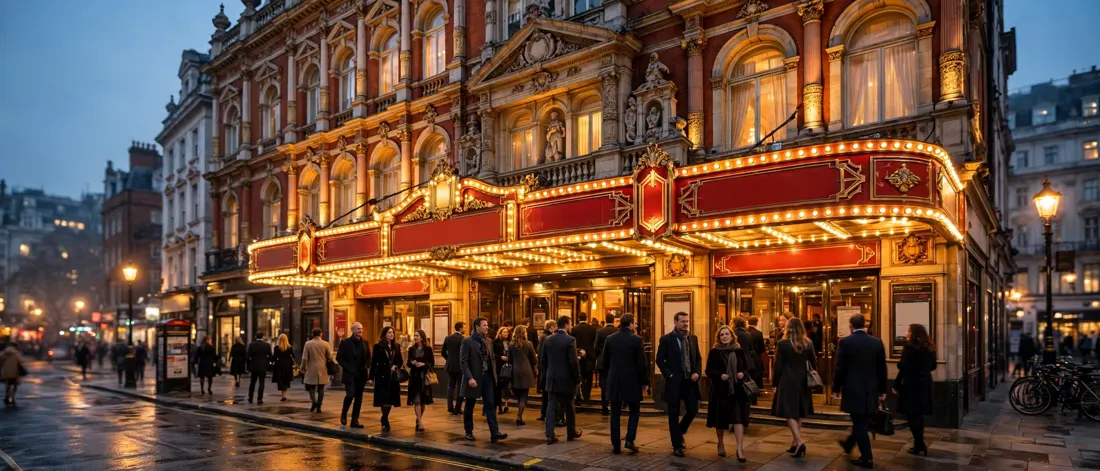

A night at a West End show should feel like an occasion from the moment you book it, not a scramble of sold-out performances, restricted-view seats and a sprint for the last train. A well-planned London theatre trip is mostly about timing: choosing the right show early, understanding how theatre seating really works, and arranging the evening around the performance instead of squeezing the performance into the evening. Whether it is a first visit or a yearly ritual, this guide covers the decisions that turn a good show into a memorable trip.
Choose the Show Before Anything Else
Everything else, from hotel location to dinner reservations, hangs off the performance you pick, so start there. Long-running musicals offer spectacle and certainty; they are polished to a shine and suit first-time visitors and family groups. Plays and new productions are the riskier, often more rewarding choice, with shorter runs that reward booking early. Consider who is coming with you. A three-hour drama delights some audiences and exhausts others, and matinees suit families and day-trippers far better than late finishes. If you are torn between two productions, choose the one with the shorter run: the long-runner will still be there next year, while the limited season may not return.
Book Tickets at the Right Time
For popular shows, the best seats at fair prices go early, often months ahead for weekend performances. For quieter productions, midweek evenings and matinees frequently offer the same production at lower prices with better seat choice. Always compare the theatre’s own box office with authorised sellers, and be cautious with resale listings at large mark-ups. Official theatre websites sometimes release returned or held seats in the final days before a performance, which can reward flexible travellers. Day seats and rush schemes exist for some productions and suit people already in London, but they are a bonus strategy, never the plan itself. If the trip is built around one show, secure the tickets first and arrange everything else afterwards.
Understand Seating Without Overpaying
Theatre seating plans reward a little knowledge. The stalls put you closest to the stage and work well for plays, although the front rows of a big musical can feel almost too close to take in the full staging. The dress circle, the first balcony, usually offers the best overall view of large productions and is where experienced theatregoers often sit. Upper balconies vary enormously between theatres: in a small playhouse they can be charming, while in a large Victorian theatre the top seats sit a long way from the stage. Always check whether a seat is marked restricted view and what the restriction actually is; a pillar at the side is a minor nuisance, while a safety rail across your eyeline matters for the whole evening. Seat reviews and view-from-seat photos on theatre sites are worth two minutes before you pay.
Plan the Evening Around the Curtain
Most evening performances start at 7:30pm and finish between 10pm and 10:45pm, and the evening works best when it is built backwards from those times. A pre-theatre dinner needs a booking by 5:30pm or 6pm at a restaurant within an easy walk, with a set pre-theatre menu designed to get you out on time. Arrive at the theatre at least thirty minutes before curtain-up: enough for the cloakroom, a programme and finding your seats without the lights already going down. Intervals are short, so order interval drinks before the show if that matters to you. Afterwards, the walk back through the West End is part of the pleasure, and staying nearby rather than racing for a train keeps the evening relaxed. If the theatre night is the centrepiece of a longer stay, our guide to planning a luxury weekend break in the UK shows how to build the days around it.
Getting There and Staying Over
London’s theatres cluster in the West End, within walking distance of several Underground stations, so a hotel anywhere in Zone 1 keeps journeys simple. Driving into central London for an evening performance is rarely the relaxed option, although a planned road trip that ends in the capital can work beautifully with parking arranged in advance; our guide to planning a luxury driving tour of the UK covers that style of journey in detail. For most visitors, arriving by train the same afternoon, checking in, dining early and walking to the theatre is the smoothest pattern. If you are staying over, choose the hotel for its walk back at night as much as its distance on the map.
Dress, Etiquette and Small Comforts
There is no formal dress code at London theatres, and you will see everything from evening dress on opening nights to jeans at a Tuesday matinee. Smart casual suits almost every occasion and photographs well if the evening matters. A few courtesies keep the night pleasant for everyone: arrive on time, because latecomers are often held until a suitable break in the performance; switch phones fully off rather than to silent; and unwrap sweets before the show starts. A light layer is worth carrying even in summer, as auditoriums are air-conditioned and can turn cool in the second act.
What It Typically Costs
Theatre trips can be tailored to almost any budget once you know where the money goes. Premium seats for a hit musical on a Saturday night sit at the top of the range, while midweek seats in the upper circle of the same production can cost a fraction of that price with a perfectly enjoyable view. Programmes, interval drinks and cloakroom fees are small individually but add up across a group, so it is worth deciding in advance what you will skip. Travel and the hotel usually outweigh the tickets on a weekend trip, which is another reason to choose the performance first: money saved on a sensible train fare or a hotel one stop further out can be spent on better seats, where it improves the evening far more.
Make a Weekend of It
A single show justifies the trip, but a second day turns it into a proper break. Pair the theatre night with a gallery morning, a long lunch and a walk through the parks, and the journey earns its cost. Two shows in one weekend, a matinee and an evening performance on the same day, is the enthusiast’s version and entirely manageable with the planning above. However you structure it, the principle stays the same: book the performance first, choose seats with your eyes open, and give the evening room to breathe. Do that, and a London theatre trip stops being logistics and becomes what it should be, an occasion you will want to repeat.