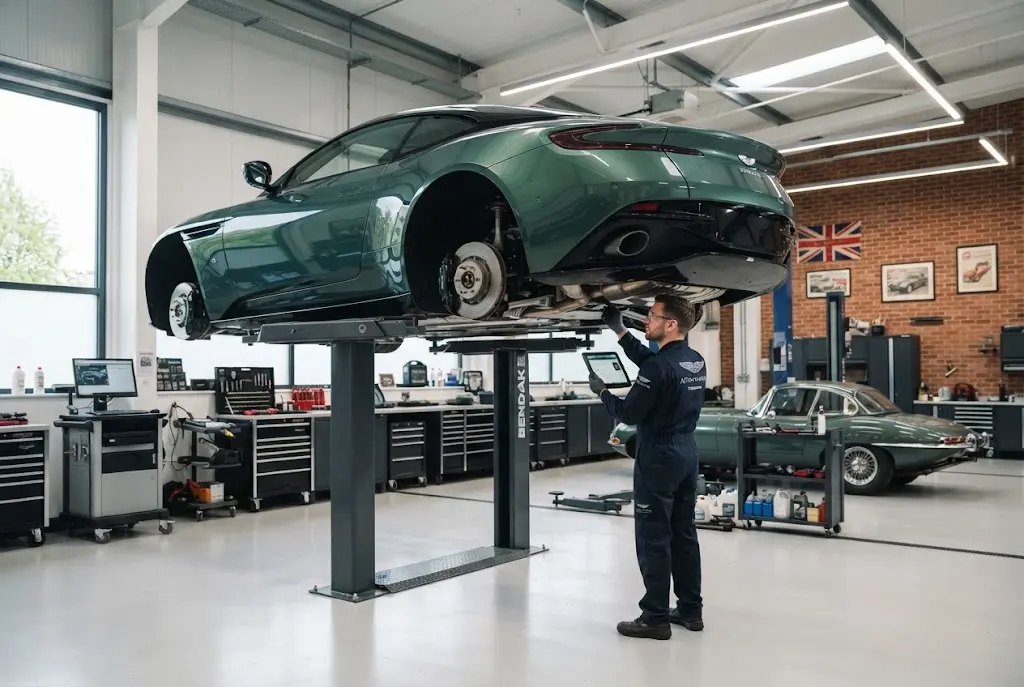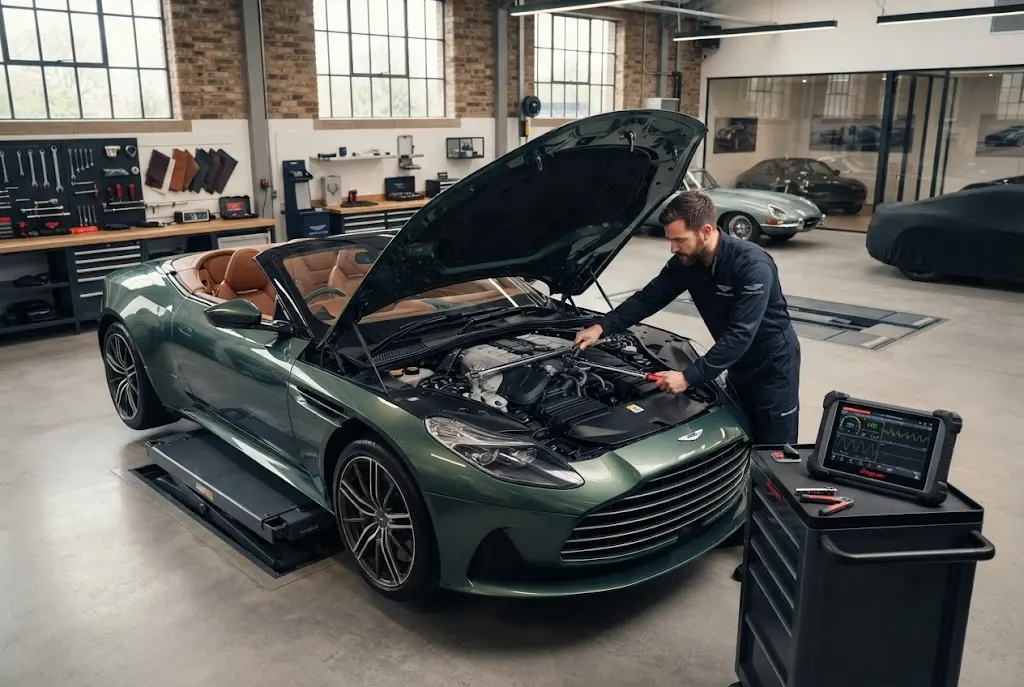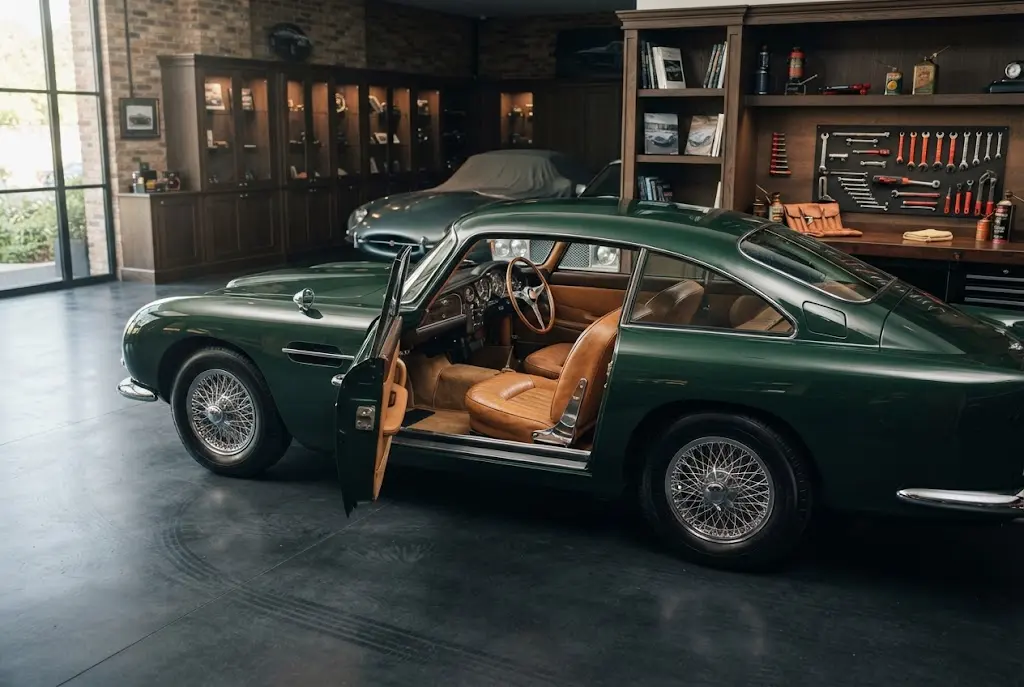

Luxury automotive services have evolved well beyond traditional repairs and routine maintenance. Modern premium vehicle ownership increasingly combines specialist technical expertise, advanced diagnostics, careful craftsmanship and a higher level of customer experience. For owners of luxury, performance and prestige vehicles, the quality of support surrounding the car can be an important part of the ownership experience itself.
This evolution reflects changes in the vehicles being maintained. Modern luxury cars can incorporate sophisticated electronics, advanced driver-assistance systems, complex powertrains and highly engineered interiors. At the same time, owners increasingly expect transparent communication, convenient service planning and careful attention to the condition and presentation of their vehicles.
What Are Luxury Automotive Services?
Luxury automotive services cover a broad range of specialist support designed around premium and high-value vehicles. Depending on the workshop and vehicle, this can include servicing, diagnostics, inspections, MOT preparation, mechanical repairs, detailing, preservation work and specialist maintenance.
The defining feature is not simply the price of the vehicle. Instead, premium servicing is generally associated with the expertise, equipment, processes and level of attention required to maintain a particular type of car properly.
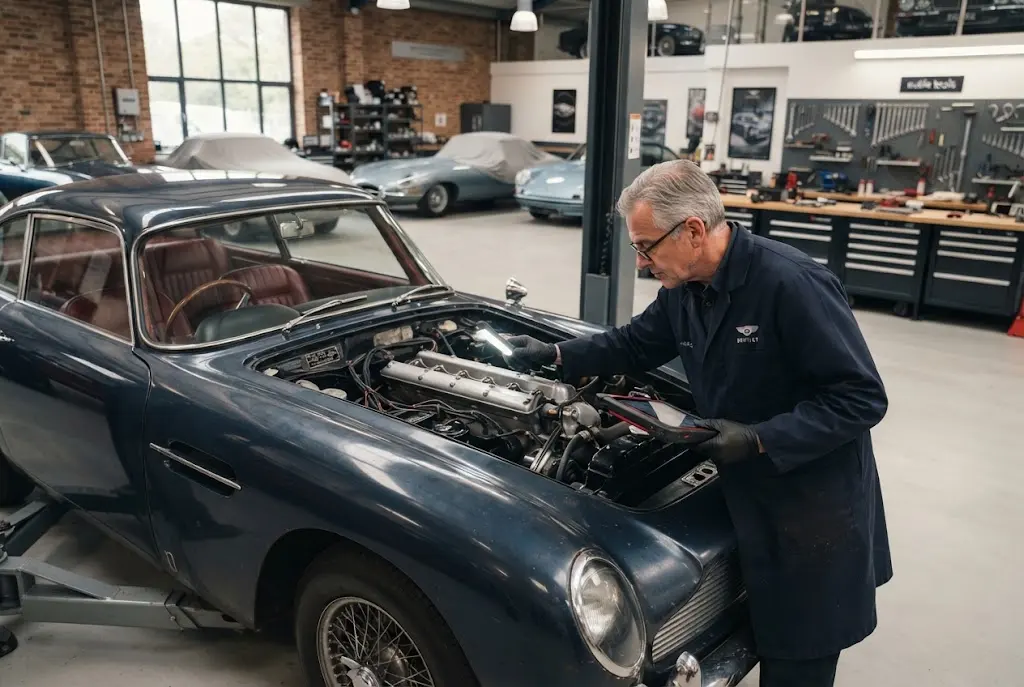
A luxury vehicle may require manufacturer-specific diagnostic systems, specialist tools or technicians familiar with particular engineering platforms. Older collector vehicles can have completely different requirements, where restoration knowledge, originality and historical context become important.
The Evolution of Luxury Automotive Services
Historically, automotive servicing was largely focused on mechanical maintenance. Oil changes, brakes, filters, tyres and repairs remain essential, but today’s premium vehicles require a much broader approach.
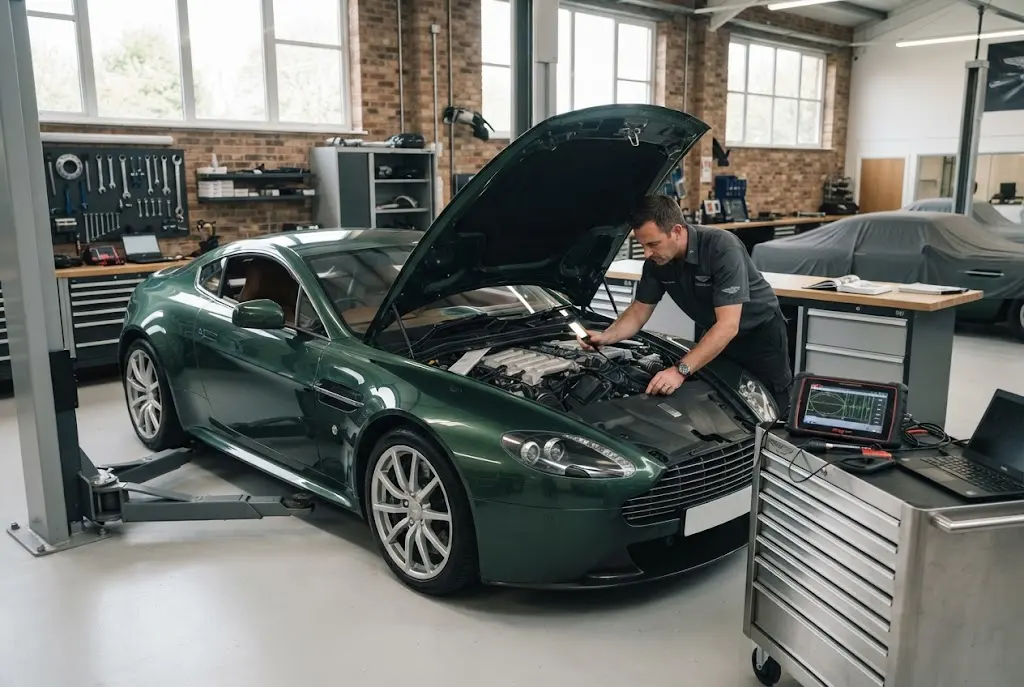
Electronic systems now influence many aspects of vehicle operation. Diagnostics can therefore play a major role in identifying faults and understanding system behaviour. Modern workshops may need to combine mechanical knowledge with electronic diagnosis and software-related procedures.
This has changed the role of the specialist technician. The work increasingly requires continuous technical learning as vehicle systems become more sophisticated.
At the same time, luxury automotive services have expanded around the ownership experience. Customers may expect clear estimates, appointment planning, detailed reports and careful handling of the vehicle throughout the service process.
Specialist Servicing and Automotive Craftsmanship
Technical expertise remains at the centre of premium vehicle care. A specialist workshop needs to understand the particular requirements of the vehicles it accepts rather than treating every model according to the same generic process.
Automotive craftsmanship is particularly relevant when dealing with high-performance, rare or heritage vehicles. Work may involve careful adjustment, restoration, preservation or the use of components that require specialist knowledge.
For collectors, the objective can extend beyond keeping the vehicle operational. Originality, condition and historical character may all influence how maintenance and restoration decisions are approached.
This is why specialist expertise can be valuable even when a vehicle does not currently have an obvious fault. Preventive inspection can identify areas that deserve attention before they develop into more substantial problems.
Technology Is Changing Premium Vehicle Care
Technology has become an important part of modern specialist servicing. Diagnostic systems can provide information about electronic control units, sensors and vehicle systems that would be difficult to assess through a conventional visual inspection alone.
However, diagnostic equipment is only one part of the process. The information generated by a system still needs to be interpreted correctly. Experienced technicians can combine diagnostic data with physical inspection, service history and knowledge of the vehicle.
This combination of technology and expertise is increasingly important as vehicles become more connected and software-dependent.
Customer Experience Has Become Part of the Service
The modern premium customer experience extends beyond the workshop floor. Owners may expect straightforward communication from the initial booking through to collection of the vehicle.
Clear explanations are particularly important when additional work is identified. Customers should understand what has been found, why it matters and whether the work is urgent, preventative or suitable for future monitoring.
Transparent communication can also help owners make better decisions about maintenance expenditure. Instead of simply receiving a list of recommended repairs, they can understand the relationship between vehicle condition, maintenance priorities and long-term ownership.
Premium Standards and Service Quality
Premium standards are not defined by presentation alone. A polished reception area can create a positive impression, but technical quality, accurate diagnostics, suitable parts, careful workmanship and proper documentation remain central to vehicle care.
Owners should therefore evaluate a workshop according to the complete service process. Relevant experience, technician expertise, equipment, communication and record keeping can all provide useful indicators when choosing a specialist.
The same principle applies to pricing. The cheapest quotation may not include the same scope of inspection or expertise, while a higher price does not automatically guarantee superior workmanship. Comparing what is actually included can provide a more meaningful assessment of value.
Luxury Automotive Services and Vehicle Preservation
Premium ownership often involves an interest in preserving the vehicle’s condition. This can be particularly important for low-mileage, limited-production and heritage vehicles.
Preservation can involve appropriate servicing, careful storage, corrosion prevention, mechanical checks and maintaining a complete record of work. For collector vehicles, unnecessary modifications may also be avoided when originality is an important part of the ownership objective.
A professional inspection can support this approach by establishing the vehicle’s condition at a particular point in time. Owners considering a specialist purchase can explore auto inspection services before committing to ownership.
Executive Mobility and Convenience
Luxury vehicles are often used for business travel, executive transport and long-distance journeys. For these owners, reliability and predictable maintenance can have practical importance beyond the vehicle itself.
Service planning can help reduce disruption by identifying upcoming maintenance requirements and arranging work at suitable intervals. A workshop that communicates clearly about expected maintenance can make ownership easier to manage.
This is also where customer experience becomes part of the wider service proposition. Convenience, communication and attention to detail can influence how owners perceive the complete maintenance journey.
The Future of Luxury Automotive Services
The future of premium vehicle care is likely to combine traditional craftsmanship with increasingly sophisticated technology. Electric powertrains, advanced driver-assistance systems, connected vehicles and software-controlled functions are changing the technical knowledge required within the automotive industry.
Specialist workshops will need to adapt as vehicle technology changes. Diagnostic capability, technician training and access to appropriate technical information will remain important, while traditional mechanical skills will continue to matter for many vehicles already on UK roads.
There is also likely to be continued demand for specialist care for older vehicles. As well-maintained collector and heritage cars remain part of the automotive landscape, expertise in restoration, preservation and model-specific maintenance will remain relevant.
Connecting Servicing With the Wider Ownership Journey
Luxury automotive services work best when individual services are viewed as parts of a wider ownership strategy. An owner may begin with a pre-purchase inspection, move into scheduled servicing and MOT planning, and later require specialist repairs or preservation work.
Understanding car service cost can help owners evaluate the financial side of this process, while MOT and service planning can help separate statutory testing from routine maintenance.
Each stage provides information that can support the next. Inspection findings can influence the initial maintenance plan, while service records can create a valuable history for future ownership or sale.
Choosing a Specialist Automotive Service Provider
Owners considering a specialist workshop should begin by assessing whether its expertise matches the vehicle. Experience with the relevant manufacturer, model or vehicle type can be particularly useful.
It is also worth asking about diagnostic capability, maintenance procedures, parts sourcing, technician experience and documentation. A professional provider should be able to explain the work clearly rather than relying on unexplained technical terminology.
For significant repairs or specialist restoration, owners may also want to understand how estimates are prepared and how additional work is authorised. Clear processes can reduce misunderstandings and provide better control over maintenance decisions.
What Premium Automotive Care Really Represents
Luxury automotive services represent a broader approach to vehicle ownership in which technical competence, specialist knowledge, craftsmanship and customer experience work together.
The evolution of the sector does not mean traditional servicing has become less important. Instead, modern premium vehicles require those fundamentals to be combined with advanced diagnostics, technology awareness and more structured customer communication.
For owners, the most useful approach is to look beyond the label of a premium or luxury service provider and examine the substance behind it. Relevant expertise, careful workmanship, transparent communication and appropriate equipment are practical factors that can influence the quality of vehicle care.
As premium ownership continues to evolve, these standards will remain relevant across modern luxury cars, performance vehicles and heritage models. The result is a service environment increasingly focused not only on keeping vehicles running, but also on supporting the complete ownership experience.
For owners interested in the broader principles of luxury vehicle ownership, specialist servicing is one part of a larger approach that includes preservation, maintenance planning, compliance and informed long-term care.